

Written by Mike Burnard: Analytical Strategist at dia-LOGOS
There have always been wars. And there always will be.
Iran is not unique.
According to global conflict trackers, more than thirty significant wars have erupted or continued since 2020 alone — civil wars, interstate wars, insurgencies, and territorial conflicts scattered across the globe.
But this one is different.
This war is live‑streamed. It is no longer distant. The bombing of Iran now unfolds in the glowing rectangle screens we hold in our hands, not in the quiet pages of tomorrow’s newspaper. All while we sit in the comfort of our homes.
This war is weaponised beyond the geographical borders of those fighting one another. It takes aim at any observer who dares to look, even as an innocent bystander.
Truth no longer arrives through patient reporting; it is shaped, sorted, and served by algorithms. Narratives are no longer crafted by witnesses on the ground but by AI systems that decide what we see first, what we see most, and what we never see at all.
Think about that.
Reading in a newspaper that an oil refinery has been bombed is one kind of knowledge — distant, contained, almost abstract. Watching it unfolding live, in real time, while acid rain descends on the innocent like a poisonous cloud is a different kind of knowledge altogether. When the sirens of ambulances are carried through our earphones, a chaos enters the mind that is impossible to escape.
The visual leaves an impression on the mind. The audio leaves an imprint on the soul.
This war exposes a new kind of spiritual vulnerability: we are no longer merely observers of violence; we are participants in a global spectacle, shaped and manipulated by the very systems that claim to inform us. The line between truth and narrative, between witness and manipulation, grows thinner every day.
And yet, in the midst of this digital storm, a deeper question arises: How do we remain human — truly human — when suffering becomes content and truth becomes scripted?
We remain human by choosing practices that resist the drift toward numbness, spectacle, and manipulation. Not grand gestures — human gestures.
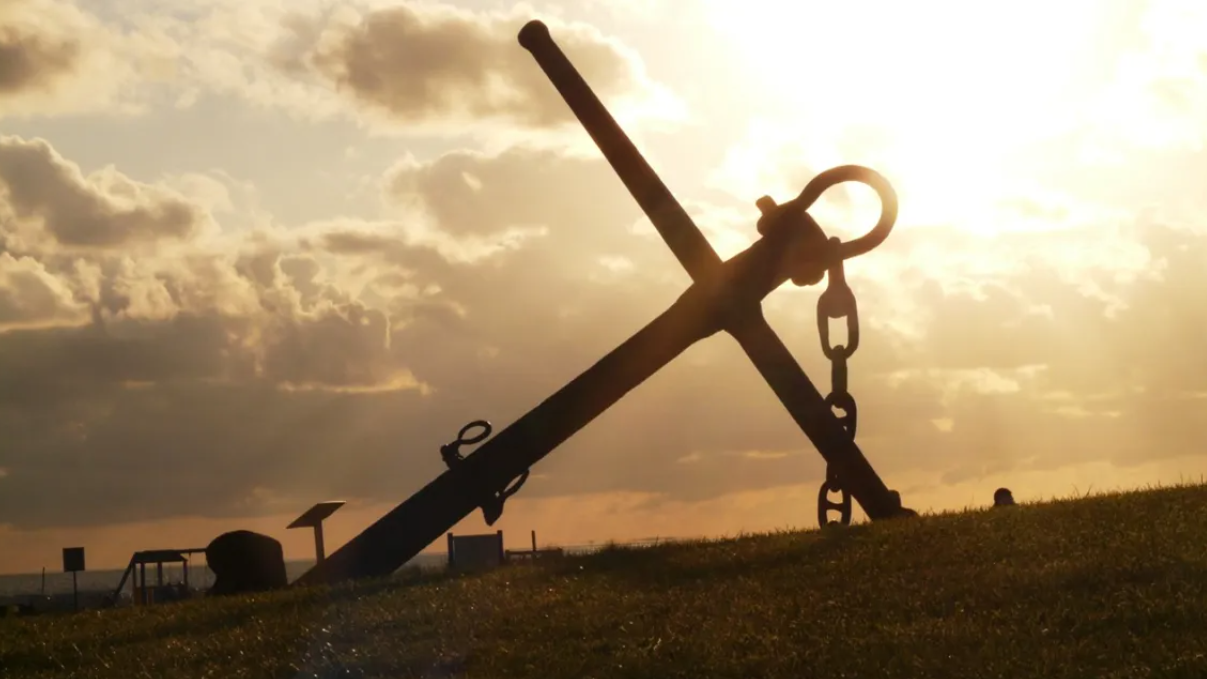
Here are 10 anchors for a human soul…
SLOWING DOWN IN A WORLD OF INSTANT REACTION
Verse: “Be still, and know that I am God; I will be exalted among the nations, I will be exalted in the earth.” – Psalm 46:10
Stillness and truth are soul companions. They walk hand in hand. Instant reactions, jumping to conclusions and biased assumptions not only silence the voice of God, but detracts from wisdom needed in times of crisis. To BE still is an act of defiance. It moves against the grain of opinions and convictions. God is not glorified in the noise of fighting or the chaos of conflicts. But He will be when we BE STILL; and He will be exalted
BREAKING THE CLICK-BAIT CYCLE
Verse: “Be quick to listen, slow to speak, slow to become angry.” — James 1:19
Algorithms reward outrage, speed, and certainty. Humanity grows in slowness, reflection, and humility.
Algorithms don’t create our biases — they magnify, harden, and normalize them until they feel like truth.
Algorithms shape our biases in ways that are subtle, powerful, and often invisible — and that’s exactly why they matter so much in a world where suffering is streamed and truth is scripted.
To remain human is to pause before we share, before we judge, before we let someone else’s narrative become our own. Resist the temptation to feed the frenzy of reading every click-bait article. Whatever is true, whatever is noble, whatever is right, whatever is pure, whatever is lovely, whatever is admirable—if anything is excellent or praiseworthy—break the click-bait cycle by thinking about such things. (Philippians 4:8)
REFUSING TO TURN SUFFERING INTO ENTERTAINMENT
Verse: “Woe to those who are at ease in Zion… but are not grieved over the ruin of Joseph.” — Amos 6:1,6
When suffering becomes content, compassion becomes optional.
To stay human is to let someone’s grief touch us without consuming it as a product. When we watch the news, we can choose to be passive spectators or active prayer warriors. Once we engage in what we see we allow ourselves to feel — not just to watch. The war in Iran and Lebanon is not a movie. For nearly a million people it is a disaster beyond comprehension. We have to view and treat it as such.
SEEKING TRUTH THROUGH RELATIONSHIP, NOT FEEDS
Verse: “You will know the truth, and the truth will set you free.” — John 8:32
Curated narratives always masquerade as truth, but a truth that deceives. A deceived truth drains life while a spiritual truth — truth that carriers the Gospel message of hope, inclusivity, compassion and beauty – is authentic and gives life
We stay human by listening to real people, real stories and real suffering. Not just to the video streams that fit our narratives and sooth our consciences.
PRACTICING COMPASSION INSTEAD OF SCROLLING PAST SORROW
Verse: “My tears have been my food day and night.” — Psalm 42:3
Blessed is those who mourn they shall be comforted. – Matthew 5:4
The Syrian Fathers of the early Church proposed that tears be a sacrament in the Church. Saint Ephrem went so far as to say that until you have cried you don’t know God.
Most of us think we know God—and ourselves—through ideas, discussions and studies. Yet corporeal, embodied theology acknowledges that perhaps weeping will allow us to know God much better than ideas. In this Beatitude (Matthew 5:4), Jesus praises those who can enter into solidarity with the pain of others and not try to remove or isolate themselves from the suffering.
Tears seem ridiculous in a war which is so focused on diversions and narratives. We must teach our young people how to cry again. Now, in my later years, I finally understand why Saints Francis and Clare cried so much, and why the saints spoke of “the gift of tears.”
Lament is the ancient antidote to numbness. It refuses to let suffering be reduced to pixels.
To lament is to say: This matters. This hurts. This should not be so.
GUARDING OUR MINDS
Verse: “Do not be conformed to this world, but be transformed by the renewing of your mind.” — Romans 12:2
Wars are not only fought on the ground, but also in the minds of observers — the place where fear, hatred, and dehumanization take root.
When presidents and Evangelical leaders express their joy that sinners will spend eternity in hell and that killing people “for the fun of it” becomes a “hearts delight”, humanity is lost. As Christians – for the sake of humanity – we cannot fit into this shape that is moulded by the world through fear and hatred. We need to speak, act and respond like people with a different, transformed spirit.
Remaining human means protecting the inner space where empathy lives.
CHOOSING PRESENCE OVER PERFORMANCE
Verse: “Bear one another’s burdens, and so fulfil the law of Christ.” — Galatians 6:2
The digital world trains us how to perform and how to execute our convictions. We simply need to regurgitate the thoughts of those we follow and all will be well. Life has become an art of image maintenance.
But humanity grows outside the digital expectations of conformation. It happened when Jesus sat with the tax collectors, spoke to the Samaritan prostitute at the well, healed the (most probably gay) servant of the Roman soldier and called Levi to be a disciple. It happens when we sit with someone who looks, speaks and acts differently than we do – a Shia Muslim from Lebanon, pray with someone with a need greater than ours – a refugee from Somalia, or simply hold silence with someone who needs someone to show up – a beggar who needs a touch more than money.
Presence is the most subversive act in an age of spectacle.
SPEAKING PEACE INTO CONFLICT
Verse: Suddenly a great company of the heavenly host appeared with the angel, praising God and saying, “Glory to God in the highest heaven, and on earth peace to those on whom his favor rests.” Luke 2:14
The “Doomsday Clock,” created by the Bulletin of the Atomic Scientists (https://thebulletin.org/) illustrates how close humanity has come to the end of the world. On January 27, 2026, the Clock was moved to 85 seconds (1 minute, 25 seconds) before midnight, the closest it has ever been set to midnight since its inception in 1947.
According to the bulletin, 2026 is not caused by human disasters, conflicts or the possibility of nuclear weapons, like previous years. It is all caused as a “failure of leadership”.
We live in a season dominated by world leaders who have an unsaturated love for power. Leaders elected to bring peace have turned into chaos- creators with a pursuit for dominance at all costs. When the angels announced the birth of Christ in a season of captivity and destruction – the declaration was not one of victory, triumphalism or conquest, but peace.
FOCUSSING ON THE ESSENTIALS
Verse: But seek first his kingdom and his righteousness, and all these things will be given to you as well. – Matthew 6:33
When politicians, the media, and the powerful start creating noise, pay attention. When they feed you war gossip, manufactured outrage, or divisive rhetoric, ask yourself: what is this a distraction from? What are they trying to hide?
Often, the loudest spectacles are designed to pull our focus away from the issues that truly matter. As followers of Christ, His Kingdom is our focus. We cannot afford or allow that the decisions being made in the shadows affect our spiritual peace, our communal unity, and our future hope. Don’t get lost in the show; look for what’s happening backstage.
ABOVE ALL
There are two “above all’s” that need to be pursued and preserved with all our hearts, all our souls and all our minds.
ABOVE ALL ELSE, guard your heart, for everything you do flows from it. – Proverbs 4:23
ABOVE ALL, love each other deeply, because love covers over a multitude of sins. – 1 Peter 4:8
Don’t be distracted into darkness while carrying the mandate of being light. Above all, guard your heart and don’t let fear, suspicion and hatred steal your love