

Written by Stefan van der Berg
On Friday 9 October, a fuel deal was signed. Over the same weekend, bombs fell on a city in Ukraine, and a missile struck the main civilian airport in Riyadh, the capital of Saudi Arabia.
Two different wars, one question: who pays the price?
The United States announced it is suspending sanctions on Russian diesel until April. The reason is the pump price. Diesel in America now averages $6.23 a gallon, according to the American Automobile Association (AAA), close to the record of $6.52 set on 22 September. President Trump wants prices down before the midterm elections in November.
Trump says Russia will first release 300,000 tonnes of diesel, and more later.
There is a catch. What gives America cheaper fuel also lets Russia earn more from its diesel. Ukraine says that could give Moscow's war budget a boost.
Ukrainian President Volodymyr Zelensky responded at once. He called the deal an undeserved gift to Vladimir Putin.
On Saturday, Trump answered. Ukraine must stop targeting Russian refineries, he said, because it causes a global problem. Then came the sentence that made the news: Trump suggested it is time for Ukraine to "get a new president."
Ukraine has been under martial law since 2022, which means no elections while the war lasts. Zelensky says he will hold elections if Russia agrees to a 60-day ceasefire.
There was more news on Sunday. Trump said Russia and Ukraine had agreed to a halt to attacks on energy targets, without giving details. Zelensky said this was news to him, but that Kyiv would support it if Moscow does too. As of Monday morning, Moscow has not responded.
For us, the war is a number on a pump. For the people in it, it is something else.
This war is not only about fuel. It is about who pays the price: the troops and their families. And beside those who pay, there are people who still bring hope.
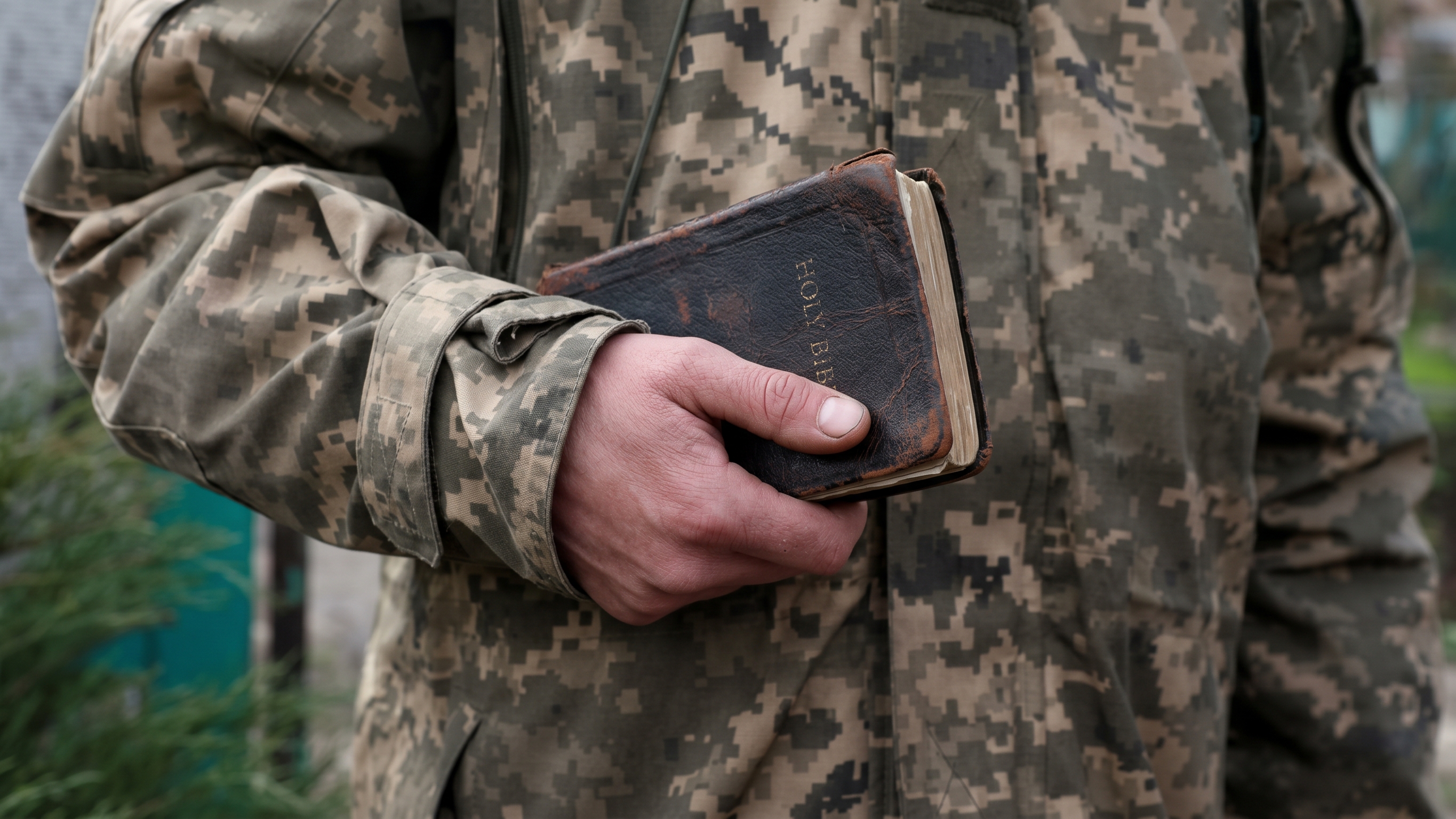
Picture a man near the front line calling a few soldiers together. He takes out a Bible and opens it. There are no weapons in his hands. He is a chaplain, and he is there not to fight but to pray, to listen, to encourage and to comfort.
Chaplaincy is not limited to Ukraine. Many armies around the world have chaplains. In Ukraine, about 1,700 military chaplains now serve, from thirteen religious organisations, according to AFP. They are not all in the trenches. But they stay as close to the troops as the war allows.
Father Dmytro is an Orthodox chaplain with a brigade that has seen some of the heaviest fighting. He keeps a list of his fallen friends. Their faded photographs hang on the wall of his chapel. And yet he says his faith has grown stronger, because the Lord spared him for a reason.
Lieutenant Oleksandra Andriyashnya, a Baptist chaplain everyone calls "Sasha," spends half of each month drinking tea with soldiers and listening. She is honest: sometimes the war has shaken her faith. But she still believes.
It costs them too. Chaplains have been killed in this war.
Father Mykola Bagirov says some soldiers hate God after a comrade's death. Then he says something worth remembering: "When they come back from the front line, they tell me about God."
Perhaps that is what happens when God is no longer just book knowledge.
The psalmist said it long ago. Psalm 34:17 (NIV):
The righteous cry out, and the LORD hears them; he delivers them from all their troubles.
The grief does not stop at the border. A colleague of mine has just returned from Russia. He says nearly everyone he met had lost someone in the war, or knew someone who had. Lucy Ash reports on a Russian priest who opposes the war. To grieving families, he says, he can say only one thing: pray, the Lord is our hope.
Hope takes no side.
The same weekend, another war reached a capital city. On Saturday, a missile struck King Khalid International Airport in Riyadh, the main civilian airport of Saudi Arabia. At least twelve people were killed and more than 300 wounded. The airport has been closed since. Saudi Arabia blames the Iran-backed Houthis in Yemen.
On Sunday evening, the same airport was hit again. One person was killed and eleven wounded.
Yemen sits on the Bab el-Mandeb, a narrow waterway between Yemen and Africa. It is one of the world's most important shipping routes for oil. When it is threatened, the world eventually feels it at the pump.
But look at who died. Of the twelve killed on Saturday, four were Saudis. The others came from Bangladesh, Egypt, Syria, Sudan and elsewhere. On Sunday, a Pakistani resident of Saudi Arabia died.
The Bible says God loves the foreigner (Deuteronomy 10:18). Before we ask who is right, we should ask who we are not seeing.
In Yemen itself, many Christians must hide their faith from their own families and communities. On the latest World Watch List from Open Doors, which ranks the countries where Christians face the most persecution, Yemen is third. Saudi Arabia is thirteenth.
The leaders are talking about fuel. The chaplains are doing something deeper. They listen. And for a soldier who has lost his friends, being heard is where hope begins.
For most of us, an airport is where a journey begins. This weekend, for at least thirteen people, the day ended at one. Somewhere, someone is waiting by a phone today for a call that will never come.
Perhaps listening is what we can do as well. Embrace someone for whom life looks hopeless today.
Not with answers. Just by listening.
And when did you last pray for someone you will never meet?
Let us pray for those who pay the price: the soldiers and the families who grieve, the wounded, and the workers far from home. And for wisdom for the leaders who decide between war and peace.