

Written by Stefan van der Berg
In just under a month, America votes. A day later, South Africa does.
The United States goes to the polls on 3 November, and South Africa holds its local government elections the day after, on the 4th. In America, immigration is one of the issues dividing voters, and it comes down to one question: who is allowed in?
For one group of people, the answer this year has been very short. No one.
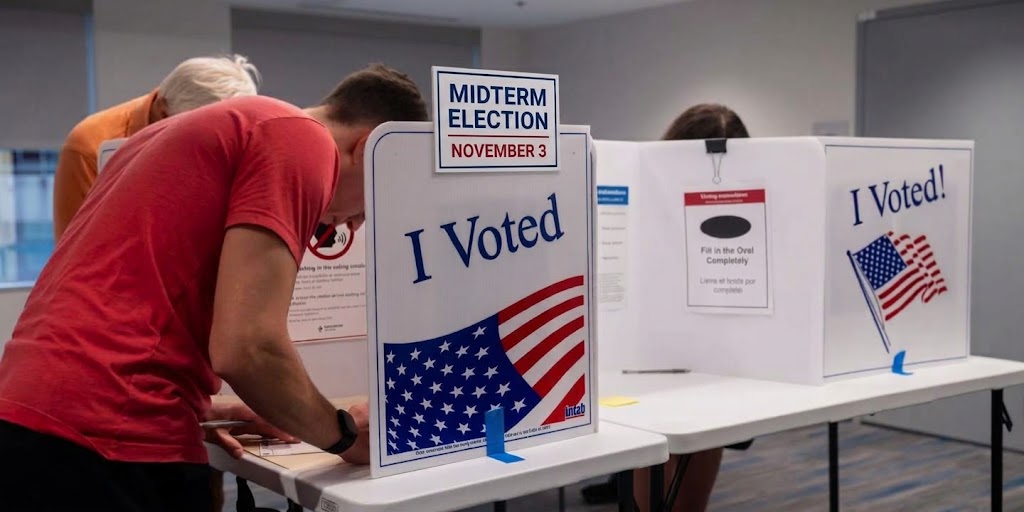
The US midterm elections take place on 3 November. Americans choose a president every four years, but halfway through his term they vote again for Congress, their parliament. All 435 seats in the House of Representatives are up for grabs, along with a third of the Senate. In that sense, the midterms are a report card on the president.
Republicans currently control both houses. Most analysts expect the Democrats to win the House, which would let them block President Trump's legislation and put his administration under closer scrutiny.
In 2024, immigration was one of Trump's strongest arguments at the ballot box. Now it threatens to cost him votes. The debate is mostly about deportations, but the same strict policy also affects refugees. And in the middle of that storm are people with no vote and no voice: people persecuted around the world because of what they believe.
In September, two Christian aid organisations, World Relief and Open Doors US, released a report in Washington on persecuted Christians. Its question is simple: does America still offer a safe haven to Christians who are persecuted for their faith?
Of the fifty countries where Christians face the worst persecution, the US has resettled not a single Christian refugee this year. It is the first time in at least twenty-five years that this has happened. Not one from North Korea. Not one from Somalia. Not one from Yemen.
For comparison, in 2024 more than 29,000 Christians from those countries found a new home in America. This year, none.
There is more than one side to this story. The US government suspended its refugee programme over border and security concerns. The two organisations want the president to reopen it. The report itself acknowledges that the suspension applies to all religious minorities, not only Christians.
An election does not automatically change the refugee ceiling. The final word rests with the president, although Congress can apply pressure.
At Dia-Logos, we often encourage persecuted Christians to stay in their countries, because where a church empties, there is one witness less. Staying is not foolish. Fleeing is not weak. The choice should belong to them, not to their persecutor.
But for people who have no other option, fleeing is the only way out. They need that door to exist.
An Afghan Christian who fled the Taliban says in the report that if we want to follow Jesus, we must care for our brothers and sisters across the world, and for anyone who flees to seek protection.
That is not a party's position. It is a question for everyone who says they believe: what do we owe people who are persecuted because of their faith?
For some, the answer is a safe place to run to. For others, it is the strength to stay. Both deserve our prayers and our support.
Politicians open doors. Politicians close doors. But there is One who said:
"Behold, I have set before thee an open door, and no man can shut it: for thou hast a little strength, and hast kept my word, and hast not denied my name." (Revelation 3:8, KJV)
"Behold, I have set before thee an open door, and no man can shut it: for thou hast a little strength, and hast kept my word, and hast not denied my name." (Revelation 3:8, KJV)
Prayer points
- For persecuted Christians: for those who must flee, a safe place and churches ready to receive them; for those who stay, strength and protection.
- For leaders in America and in South Africa: wisdom, and peaceful elections.