

Written by Stefan van der Berg
Yesterday, a flydubai flight from Dubai to Tel Aviv became every passenger's nightmare. According to Israeli officials, including the prime minister, one pilot stabbed another in a suspected terror attempt to crash the plane before being subdued by passengers. The aircraft ultimately landed safely in Saudi Arabia, where the suspect remains in custody. While Israel has labeled it an attempted terror attack, flydubai maintains the motive is unknown pending a formal investigation.
As a former pilot and flight instructor, I have spent many hours in simulators drilling emergency procedures, and teaching others to do the same. Those hours are built on one assumption: the system is designed to protect you, even when something goes wrong.
So, is flying still safe? The numbers say yes. In 2025, there were 51 accidents among 38.7 million flights, and eight of them were fatal. A decade ago, the rate was one fatal accident per 3.5 million flights. Today it is one per 4.8 million. Although 2025 did see more deaths than recent years, driven largely by two crashes—Air India 171 and a midair collision over Washington.
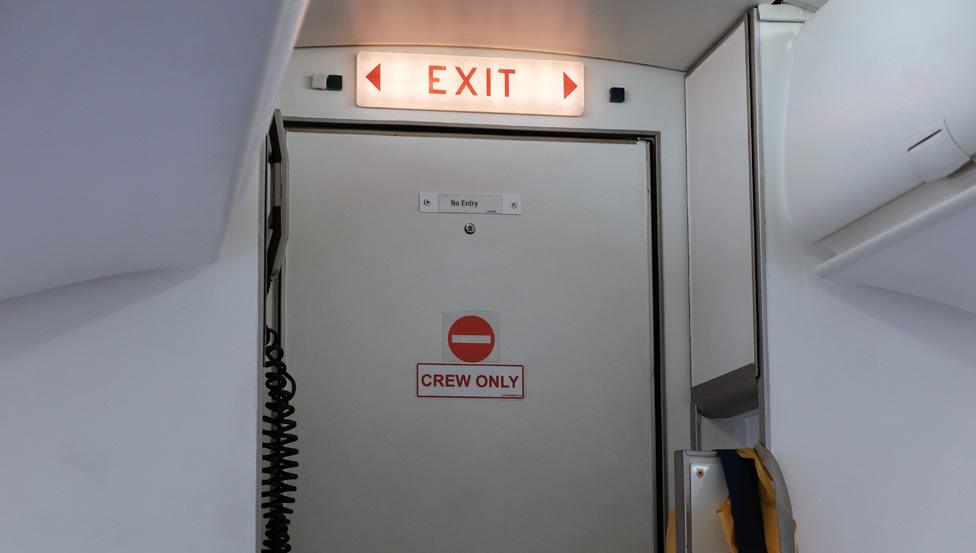
The rare danger that engineering struggles to solve is the one inside the cockpit. Since 9/11, reinforced doors keep outsiders out, but they can also shut the rest of the crew out. After the 2015 Germanwings crash, European regulators recommended at least two crew members in the cockpit at all times. That was later relaxed, with airlines left to decide for themselves, partly because opening the door more often brings its own security risks. Every safeguard has a trade-off.
That same investigation highlighted a less visible, but equally dangerous, vulnerability: the co-pilot had not disclosed a mental health diagnosis to his employer, possibly out of fear of losing his licence. The regulatory response was a requirement for EU airlines to offer confidential peer support programmes. Even so, a widely cited occupational health study found that 56% of pilots still avoid some form of healthcare for fear of losing their flying status.
What happened yesterday may turn out to be something different, and we should wait for the facts. Behind every safety rule is a person, and behind every person, a story we rarely see. Today, that's worth a moment of thought and a prayer.
- We pray for the captain who was injured, that he will recover fully.
- We pray for the man now in custody, that his heart will be reached, and that he will come to know forgiveness and redemption.
- And we pray for everyone traumatised by those minutes in the air: passengers, crew and their families.
Until the facts are in, the data still says to board with confidence, while the industry keeps working on the hardest risk of all: the human one.