
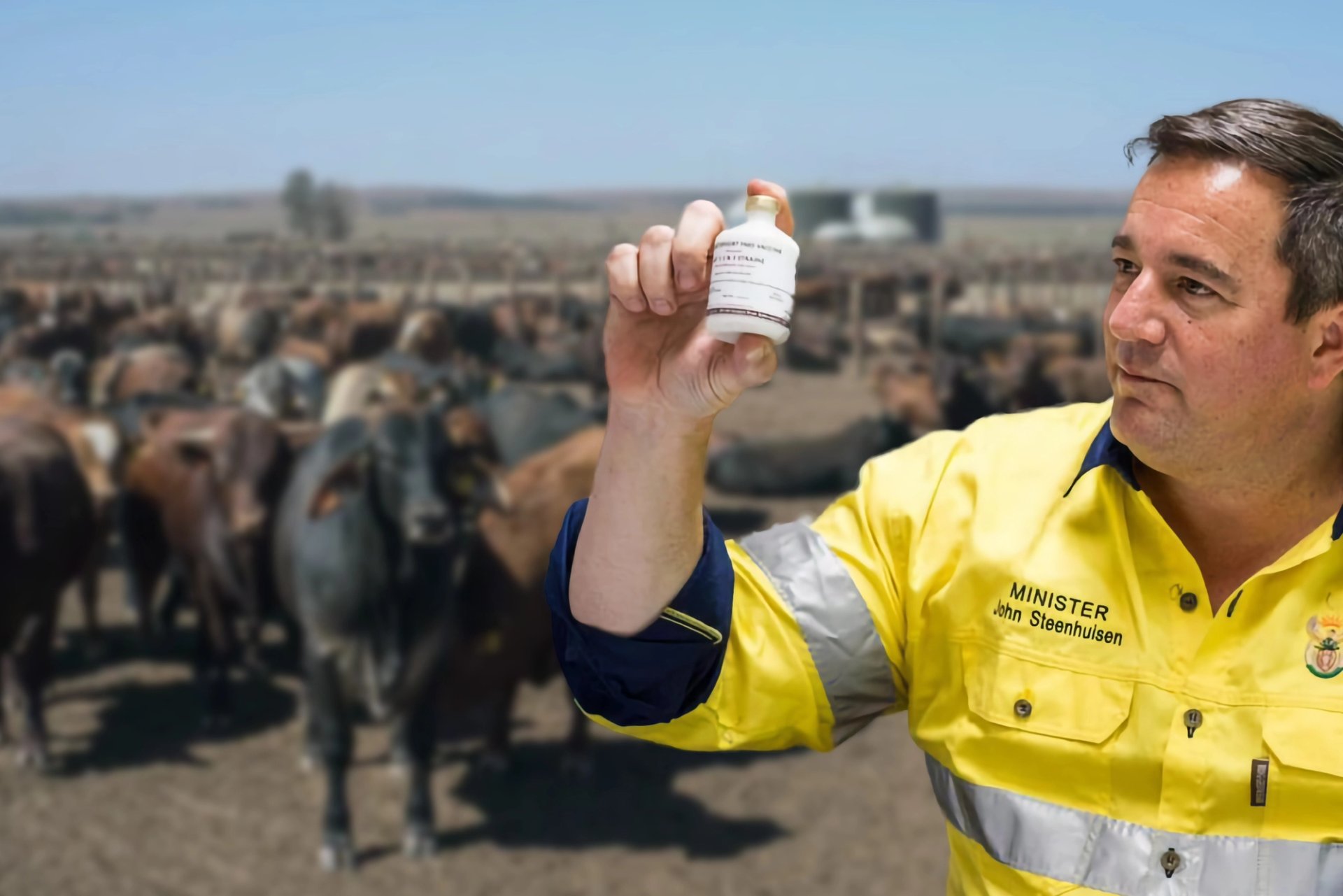

A Christian perspective on the news does not mean we look away from what went wrong. It means we look further to what can be done better. This piece is not about party politics. It is not against Mr. Steenhuisen as a person. It is about holding power accountable, and what that looks like for a Christian citizen.
There is a retired cattle farmer in our congregation. His father started a farm in a district widely regarded as unsuitable for cattle farming. The father was a paraplegic, moving across his farm in a wheelchair with inflated tyres. The ground was full of dubbeltjies, those hard little thorns that catch in anything that rolls over them. Every rotation of the wheel picked them up. A second rotation and the tyre would puncture. So with every turn of the wheel, he swept them back with his bare hands. Both hands. Every time. For years.
Until both palms were covered in hard callouses that told the whole story without a single word.
For many, this is the South African farmer. Farming here is not a job. It is a calling. A calling to absorb the thorns, rising production costs, labour challenges, livestock disease, and still put food on the country's table while keeping the business alive. From the large commercial operation to the most rural subsistence farmer, that calling deserves a ministry of agriculture that serves them with the same determination they bring to the land every single day.
And it is precisely this calling that found itself at the centre of a political decision last week.
Foot and Mouth Disease (FMD) is not new to South Africa. But 2025 was different. The outbreak itself was not the problem. The response to it was. And to understand why, we need to look at what actually happened.
FMD spread across most of South Africa's provinces. Farmer organisations sourced vaccines. Private vets were ready and willing to administer them. The private sector made it clear that they could help.
The ministry said no.
Mr. Steenhuisen's department kept the vaccination programme under state control, excluding private vets and farmer organisations from the process entirely. To be fair, Mr. Steenhuisen inherited this serious outbreak. He was also on record acknowledging the stakes, saying publicly that if they did not get this right the consequences would be severe. The problem was not the words. It was what came after them.
In court proceedings it emerged that formal letters from farmers asking for help were forwarded internally and described as amusement. Farmer organisations and agricultural bodies took the matter to court. They won but the case took time and the disease kept spreading.
The cost is not debatable. Beef exports dropped 26% in 2025. Shipments to China, our third biggest export market, fell 69% after a ban tied directly to FMD. Markets built over years were severely damaged. More than 90 dairy farms affected by mid-January 2026, over 210,000 animals involved, dairy losses alone crossing R1 billion. Total export losses projected at R2.6 billion by year end. The worst meat inflation since 2017. Expert warnings from veterinary and industry bodies throughout 2025 were heard but not acted on in time.
A 2024 University of Johannesburg poll from the Centre for Social Development in Africa confirms the following. The top predictors of voter behaviour in 2024 were trust in institutions, corruption, and trust in leadership. Not policy documents. Not party manifestos. Trust. That is what people are voting on.
And trust, the data tells us, is exactly what is being lost.
Every public servant exists for one reason. In a democracy, the job is to listen to the man on the street, interpret the evidence, and together with the private sector translate it into policy that protects and benefits the people. That is not a complicated idea. It is just rarely practised.
Governance is not about being in power. It is about what you do with it. Power held in trust must protect people, not the system that holds it. That applies to every minister, every municipal councillor, every ward representative, every public servant drawing a salary from the people they were appointed to serve. Removing a minister who mismanaged a crisis is not revenge. It is how accountability is supposed to work.
"From everyone who has been given much, much will be demanded. And from the one who has been entrusted with much, much more will be asked." — Luke 12:48 (NIV)
Scripture is plain. Those entrusted with power answer for how they use it, not just to voters, but to God.
Keep praying for our country's leaders. And keep demanding that the numbers are explained to you, because when they aren't, someone always pays the price. It is usually the people who can least afford it.
Hard callouses. Honest hands.
South Africa's farmers have always held up their end. This week was about whether their leaders hold up theirs.