

Written by Stefan van der Berg
The Arctic Parable
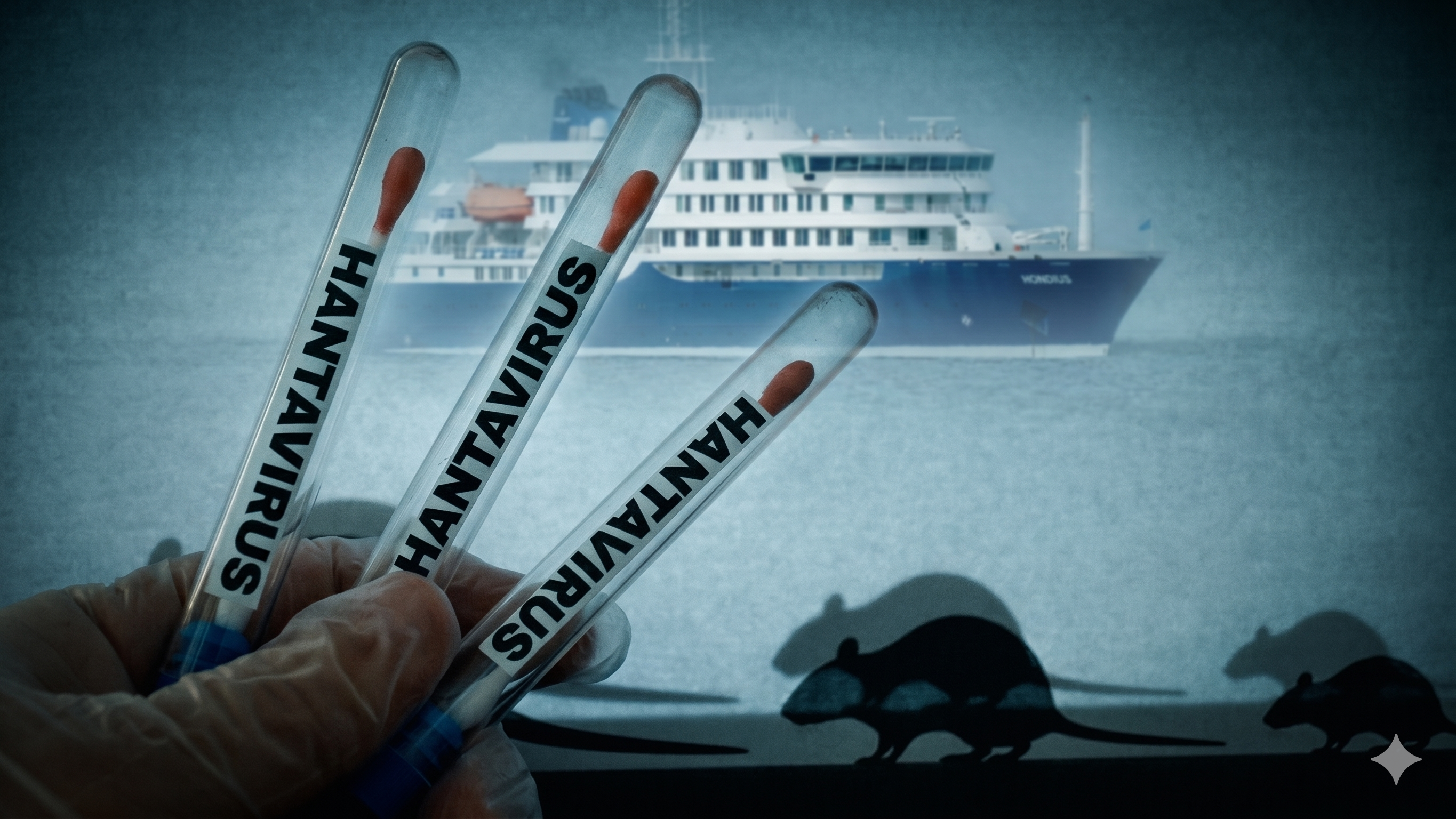
The MV Hondius is a masterpiece of maritime engineering. Built for the crushing weight of polar ice and the isolation of the Southern Ocean, it is a fortress of self-sufficiency. It boasts ice-strengthened hulls, advanced thermal imaging, and a dedicated medical suite. It is designed to withstand the world’s most hostile environments.
Yet, imagine a scenario where the ship’s greatest threat isn't a stray iceberg or a Force 10 gale, but a microscopic passenger: the Andes strain of Hantavirus.
In this stress-test scenario, the fortress becomes a cage. Despite the ship’s "strong walls," the virus slips through—not by breaching the hull, but by hitching a ride in the bloodstream of a traveler. And this is where the metaphor begins to mirror the mission field: strength against visible storms, but fragility against unseen incubations.
The Pathological Profile: A Stealth Killer
What makes the Andes strain a strategist’s nightmare is its defiance of standard "outbreak" rules. Most hantaviruses are a dead-end in humans; the Andes strain, however, is the outlier. It is capable of human-to-human transmission through the most mundane rituals of connection: a shared meal, a passed drink, a long conversation in a cramped cabin.
More chilling still is its incubation period. A passenger can carry the virus for up to six weeks without a single cough or fever. By the time the first person collapses, the "ice-strengthened" protocols are already weeks too late. With a mortality rate hovering near 40%, the virus reveals a haunting truth: fragility often hides in the ordinary rituals of human presence.
The Missions Parallel: The Limits of Planning
The Hondius serves as a stark mirror for the global Mission community. We have built robust systems—digital security protocols, sophisticated fundraising engines, and rigorous "Go" assessments. Yet, what we saw during the 2020–2022 Covid era was that these systems were designed for visible storms, not invisible incubations.
Here is what incubation looked like in practice:
- 80% of long-term missionaries faced severe mobility restrictions.
- Short-term missions—the traditional engine of mobilization—collapsed by nearly 90%.
- Financial shortfalls reached 30% for agencies relying on legacy models.
The failure was not a lack of grit; it was the Incubation Paradox. Like the passengers on the Hondius, mission organizations operated under "normal" rules while disruption was silently replicating in their systems.
The Shifting Horizon: From Biology to Geopolitics
We see this same principle currently playing out in the Middle East. Geopolitical shocks rarely happen in a vacuum; they incubate long before the "iceberg" appears. We see it in the tightening of visa regulations, the incremental monitoring of bank transfers, and the quiet narrowing of religious freedom laws. By the time a border is officially sealed or a visa is revoked, the "virus" of restriction has already been replicating for months.
The lesson is consistent: whether it is a biological pathogen or a geopolitical shock, the "ice-strengthened hull" of a mission agency is only as good as its ability to operate when the ship is stuck in harbor. Fragility is not a flaw in our planning—it is woven into the fabric of an interconnected world.
The Mandate: Designing for the Unseen
For the Body of Christ, the takeaway is not to retreat in fear, but to rebuild with Strategic Resilience. If the Hondius teaches us anything, it is that we must design for the "stealth phase." This means:
- Decentralizing Authority: Moving away from "command-and-control" centers that can be paralyzed by a single border closure.
- Local-First Empowerment: Investing in local leaders who do not require a "flight in" to maintain the work.
- Theology of Presence: Recognizing that our "shared meals and handshakes" are our greatest strengths, but also our most vulnerable points in a closed-access world.
Strategic planning must anticipate the next "incubation period". Only then can the mission endure when the unexpected arrives, ensuring that the Gospel is not restricted even when the messengers are.
"He is like a man building a house, who dug deep and laid the foundation on the rock. And when a flood arose, the stream broke against that house and could not shake it, because it had been well built." — Luke 6:48